menu
logopatek philippe certificate
THG_IAW26_UWK_UR-101_Green-Mamba_Cover-Image

URWERK UR-101 GREEN MAMBA RETURNS TO ITS ORIGINS IN BLACK AND GREEN

Latest Releases
12 Nov 2026 · 7 min read

URWERK revisits one of its earliest creations with the UR-101 Green Mamba, a new interpretation of the watch that helped establish the independent Manufacture's approach to displaying time. Nearly three decades after its debut, the UR-101 returns with a black PVD-coated steel case and an emerald-green wandering-hours display, retaining the unconventional architecture that distinguished the original.


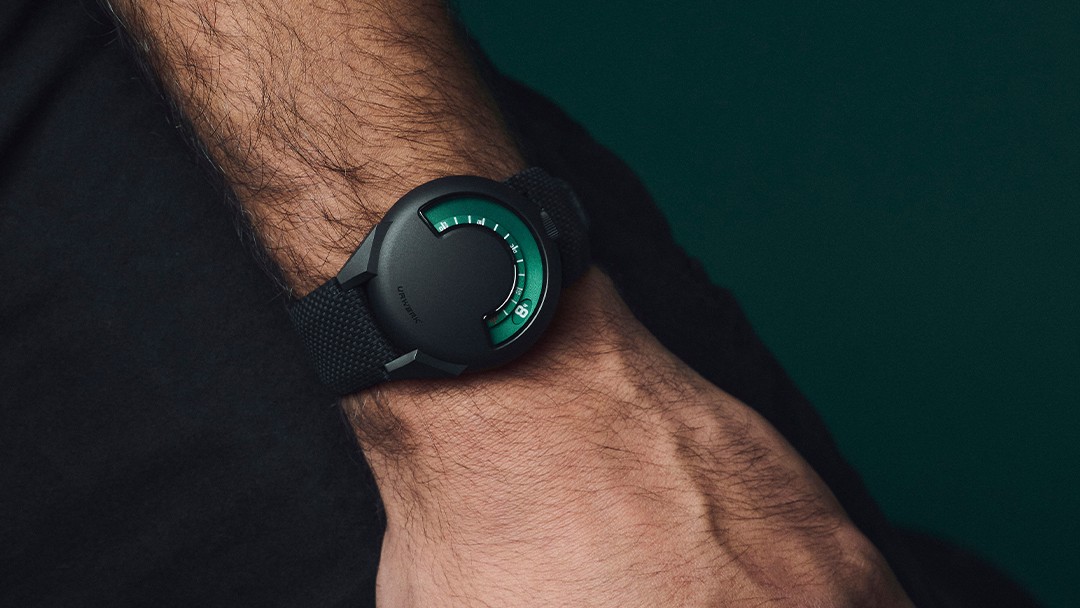
The contrast between black and green defines the latest model. The darkened case recedes visually, directing attention towards the curved display that occupies the upper portion of the watch. Its asymmetrical silhouette remains largely unchanged, reflecting the enduring relevance of a design first introduced in 1997.
Revisiting the Foundations of URWERK
THG_IAW26_UWK_UR-101_Green-Mamba_2
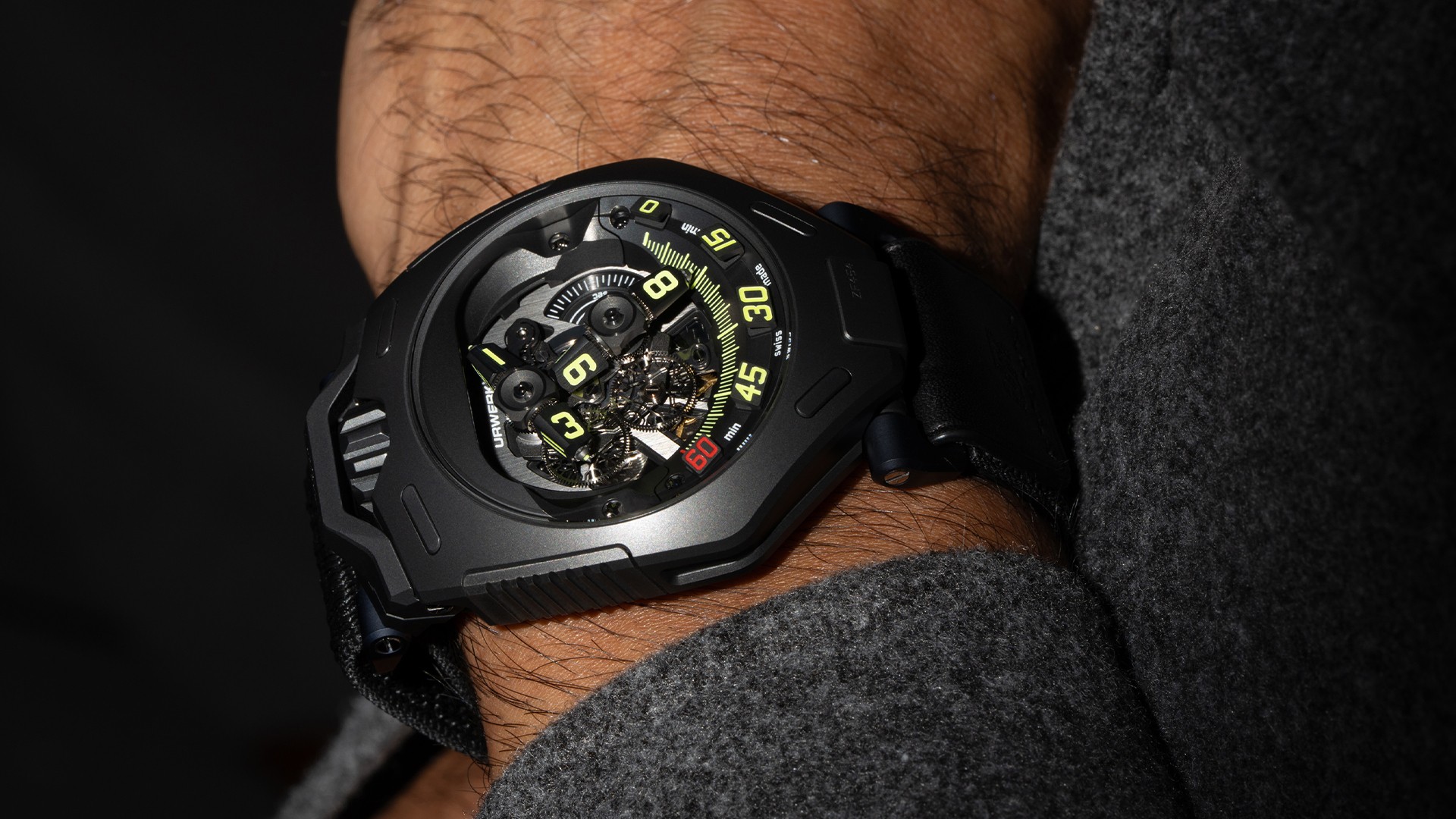
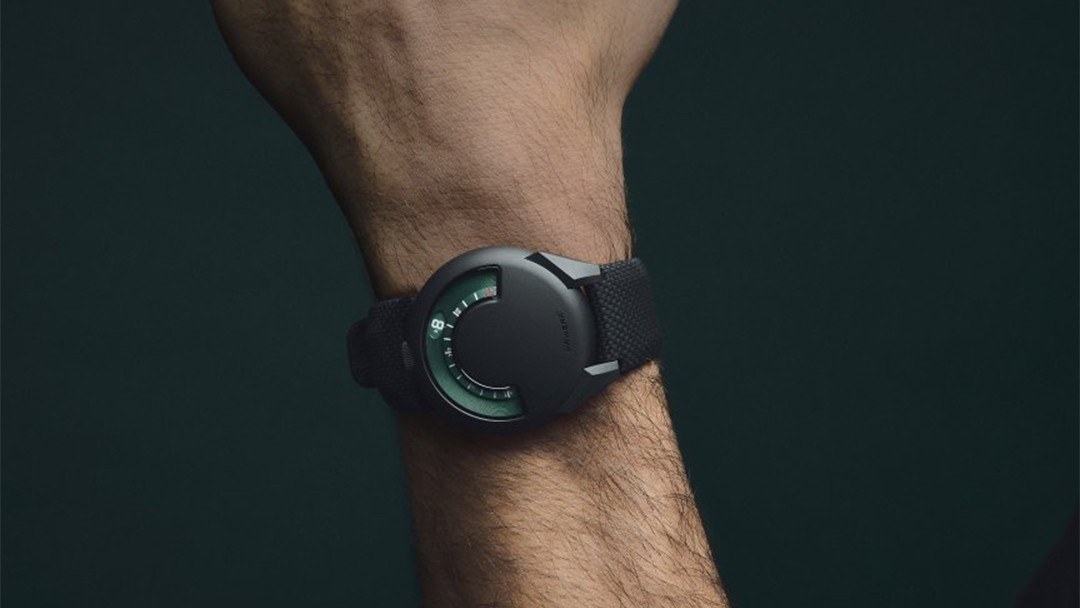
The UR-101 Green Mamba displays time through two rotating hour satellites that travel along a curved minute scale

The UR-101 made its debut alongside the UR-102 at Baselworld in 1997, the same year Felix Baumgartner and Martin Frei founded URWERK. Both watches introduced the wandering-hours indication that would become central to the Manufacture's identity, replacing conventional hands with a satellite-based system that traces the passage of time across an arc.


For Baumgartner, a master watchmaker, and Frei, an artist and designer, the objective was to develop a mechanical watch whose architecture offered an alternative to traditional dial layouts. Their respective disciplines informed an approach that has continued to shape URWERK's subsequent creations.

THG_IAW26_UWK_UR-101_Green-Mamba_1
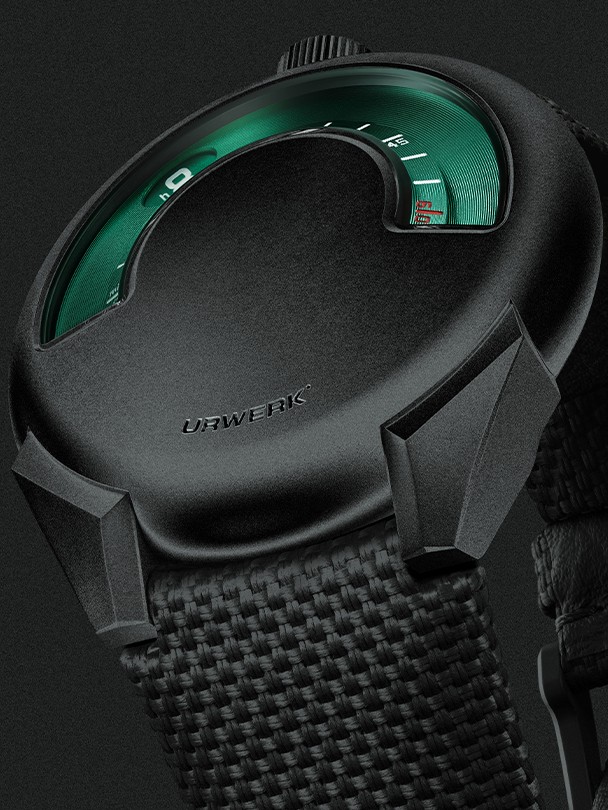
The URWERK UR-101 Green Mamba features a 41mm black PVD-coated steel case with an emerald-green wandering-hours display

The UR-101 Green Mamba returns to that original design with a more concentrated use of colour. Its 41mm steel case and caseback receive a black PVD coating, while the dial's emerald-green segment provides a distinct visual contrast. The case measures 10.3mm thick and is fitted with a glare-proofed, metallised sapphire crystal.


"With the UR-101 Green Mamba, we're returning to something very instinctive," explains Baumgartner. He describes the original intention as displaying time differently, with the black case allowing the object to recede while the green indication establishes its identity.

A Different Way of Reading Time
THG_IAW26_UWK_UR-101_Green-Mamba_3
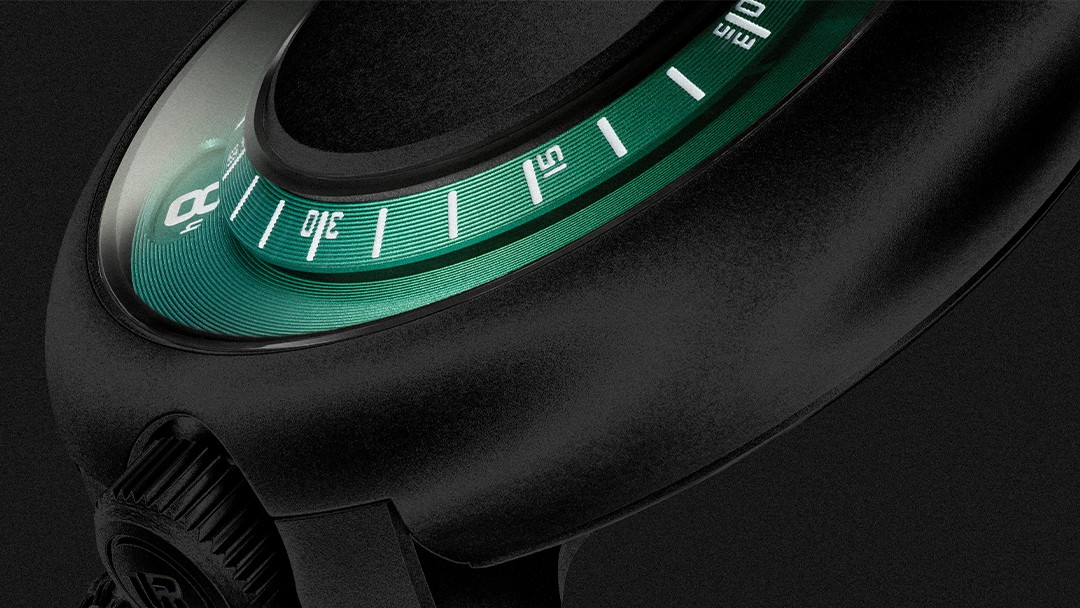
The curved emerald-green minute track features hour and minute markers painted with SuperLumiNova for improved legibility

The wandering-hours display remains the defining feature of the UR-101. Two satellites rotate on a central carousel, presenting the hours as they travel across a 180-degree minute scale. The active satellite indicates the hour, while its position along the arc determines the minutes. As one satellite completes its passage, the next assumes the indication.


This mechanical arrangement gives the display its characteristic movement, with the hour numerals progressing across the upper section of the case rather than rotating around a conventional dial. On the Green Mamba, the emerald-green minute track emphasises this trajectory. Hour and minute markers are painted with SuperLumiNova to improve legibility in low-light conditions.

THG_IAW26_UWK_UR-101_Green-Mamba_4
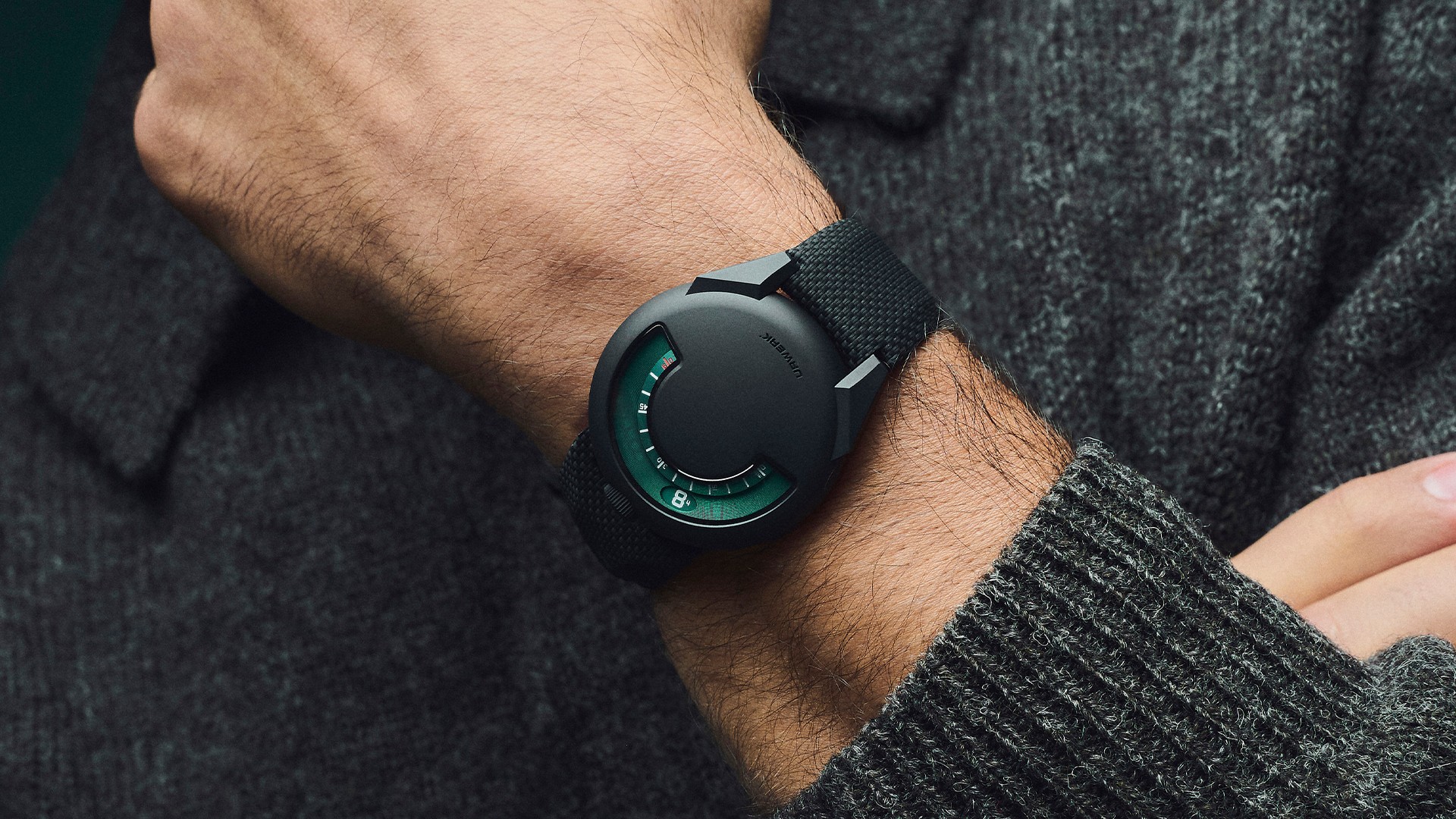
A black rubber strap with black calfskin lining complements the UR-101 Green Mamba's darkened steel case

The colour scheme draws on references from beyond watchmaking. Frei associates the green display with the illuminated control panels of spacecraft and the eyes of a mamba concealed within the jungle. The asymmetrical case, finished in what he describes as Panter Black, also takes inspiration from the Millennium Falcon in Star Wars.


These references reflect Frei's longstanding interest in science fiction and unconventional forms. He also connects the wandering-hours indication to the astronomical instruments of the Renaissance, which contributed to the development of alternative methods of displaying time.

Mechanics Behind the Green Mamba
THG_IAW26_UWK_UR-101_Green-Mamba_5
The UR-101 Green Mamba revisits the asymmetrical case design first introduced by URWERK at Baselworld in 1997

Powering the UR-101 Green Mamba is the self-winding calibre UR-1.01V, operating at a frequency of 28,800vph, or 4Hz. The movement incorporates 28 jewels and provides a power reserve of 48 hours. Its construction includes components made from copper, brass, and ARCAP P40.


The movement's finishing encompasses snailing, sandblasting, satin-brushing, and chamfered screw heads, reflecting the attention given to its mechanical components. The watch is pressure-tested to 30m and fitted with a black rubber strap lined in black calfskin. A black DLC-coated steel pin buckle completes the arrangement, maintaining the dark exterior established by the case.

Nearly Three Decades of Wandering Hours


The UR-101 occupies a significant position in URWERK's history. Its satellite display established an approach to mechanical time indication that the Manufacture would continue to develop through increasingly complex constructions, including the three-dimensional rotating satellites of the UR-103 introduced in 2003.


The Green Mamba demonstrates how the original architecture accommodates a different visual treatment without altering its underlying principles. The curved display, two-satellite indication, and asymmetrical case remain recognisable elements of the design first presented at Baselworld.


By concentrating the composition around a black case and green hour indication, URWERK returns attention to the mechanical idea that informed its earliest watches. Almost 30 years after the UR-101 first appeared, its wandering-hours system continues to provide the foundation for a distinct interpretation of time.

Share the story
1999 - 2026 © The Hour Glass Limited. All Rights Reserved.