menu
logopatek philippe certificate
THG_IAW26_PB_Ref-2914_Chronograph-Monopusher_Cover-Image

PETERMANN BÉDAT REF. 2914 CHRONOGRAPH MONOPUSHER BRINGS CLASSICAL PROPORTIONS TO CONTEMPORARY WATCHMAKING

Latest Releases
16 Nov 2026 · 10 min read

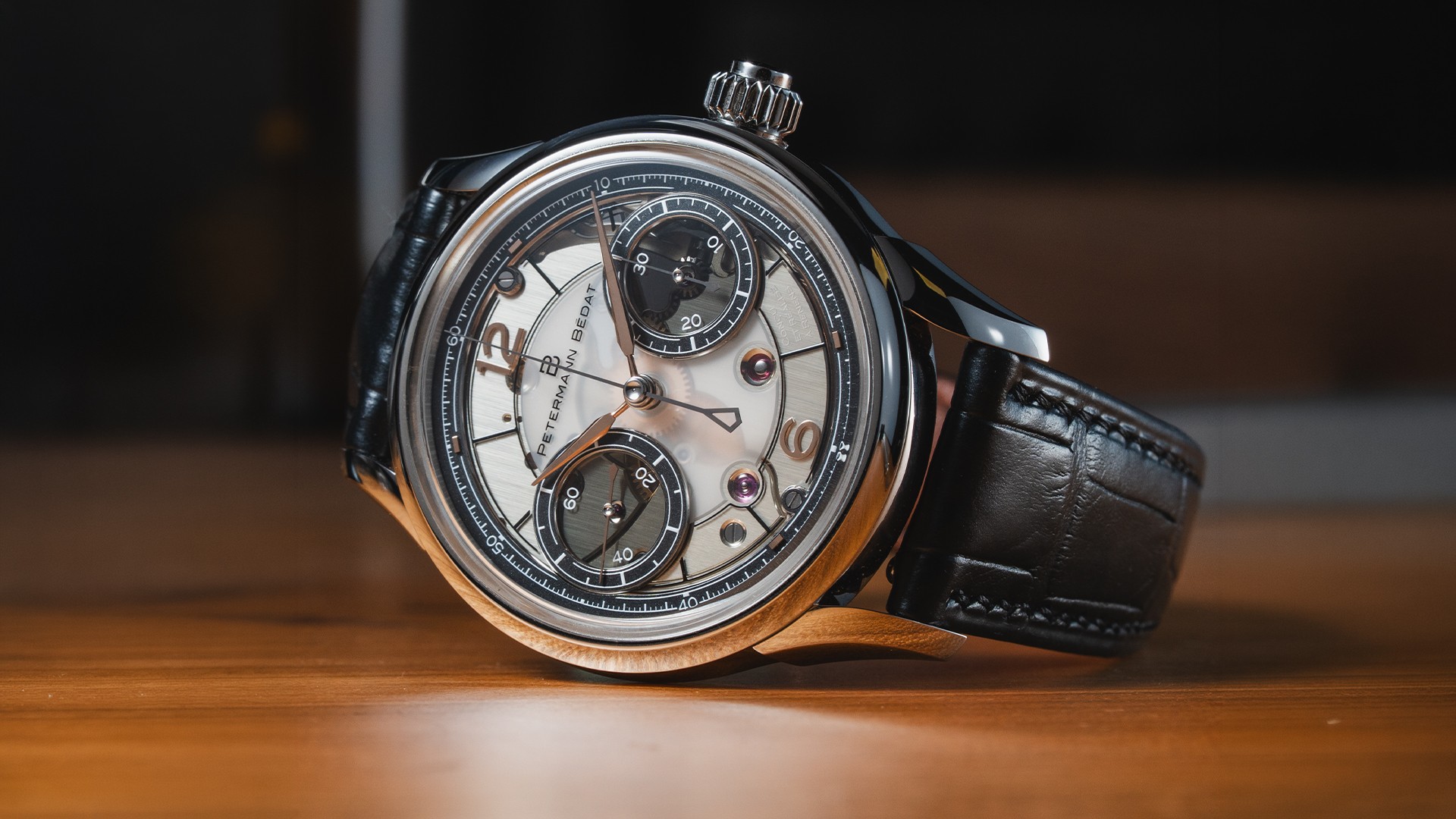
The Petermann Bédat Ref. 2914 Chronograph Monopusher marks a new development in the independent Manufacture's approach to mechanical watchmaking. Introduced in 2026, the latest creation by Gaël Petermann and Florian Bédat revisits the chronograph architecture first established with the Ref. 2941 in 2023, introducing a new movement and more compact proportions.


Housed in a 36.5mm platinum case, the Ref. 2914 draws inspiration from historical chronographs, when complicated mechanisms were frequently accommodated within relatively small cases. Its construction reflects the founders' background in restoring historical watches, combining traditional techniques with their own approach to movement architecture and finishing.


The result is a monopusher chronograph distinguished by an instantaneous minute counter, a semi-open dial, and an extensively hand-finished movement developed at the Manufacture's workshop in Renens, Switzerland.
From the Ref. 2941 to the Ref. 2914
THG_IAW26_PB_Ref-2914_Chronograph-Monopusher_1
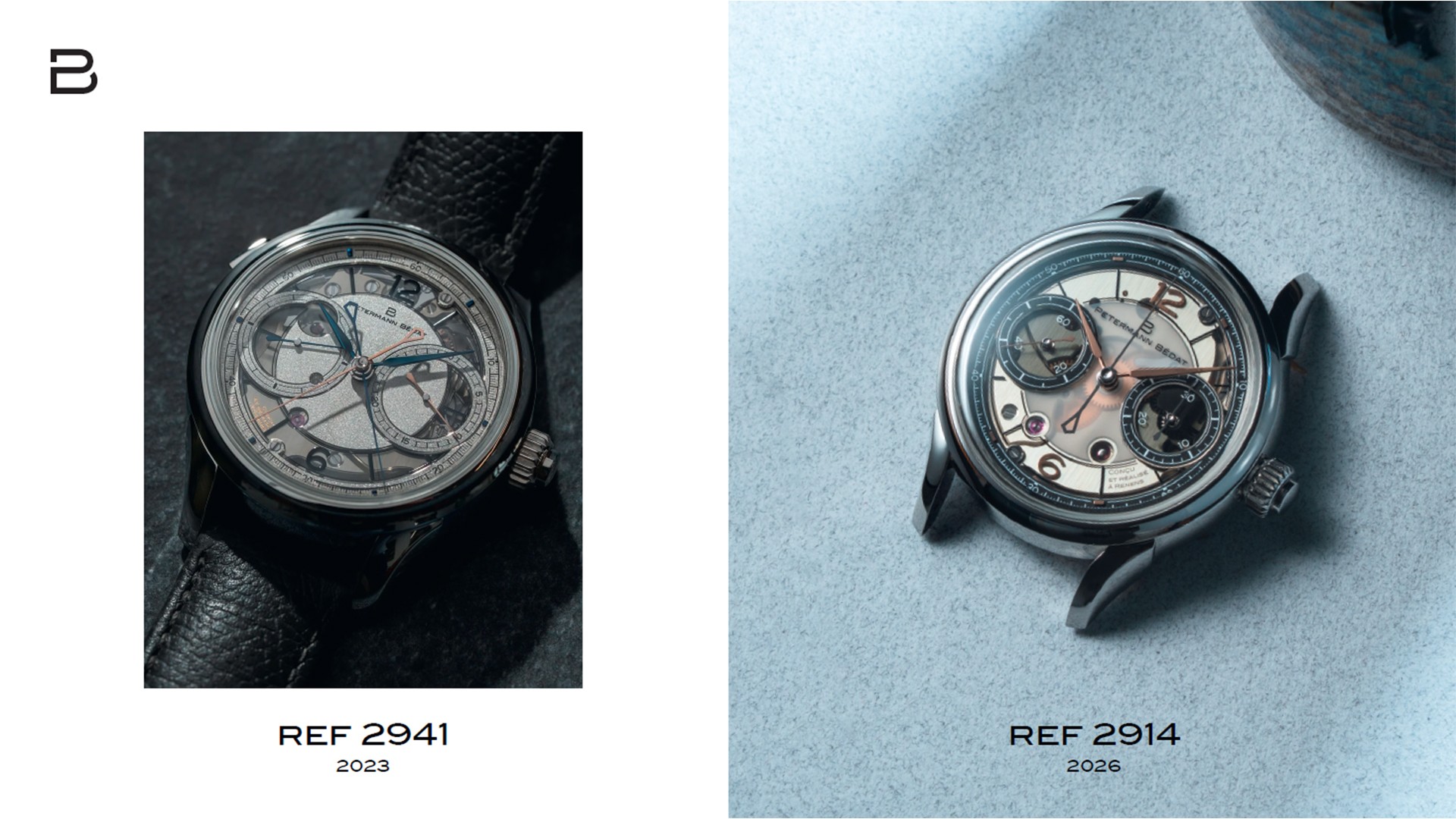
The Ref. 2941 from 2023 alongside the new Ref. 2914 Chronograph Monopusher from 2026

The Ref. 2914 follows the Ref. 2941, Petermann Bédat's first chronograph, introduced in 2023. The earlier watch combined a monopusher split-seconds chronograph with a jumping minute counter, allowing two elapsed times to be measured independently through its rattrapante mechanism.


For the Ref. 2914, the founders have taken a different approach. The split-seconds mechanism has been removed, allowing the movement to concentrate on the conventional chronograph function while retaining an instantaneous minute counter. This revised construction has also provided an opportunity to reconsider the proportions of the watch. Where the Ref. 2941 measured 38.6mm in diameter, the Ref. 2914 reduces this to 36.5mm, returning to dimensions more commonly associated with historical chronographs.


The decision reflects the founders' experience in restoring vintage pocket watches and wristwatches, where compact dimensions often concealed considerable mechanical complexity.

Classical Proportions in Platinum
THG_IAW26_PB_Ref-2914_Chronograph-Monopusher_3
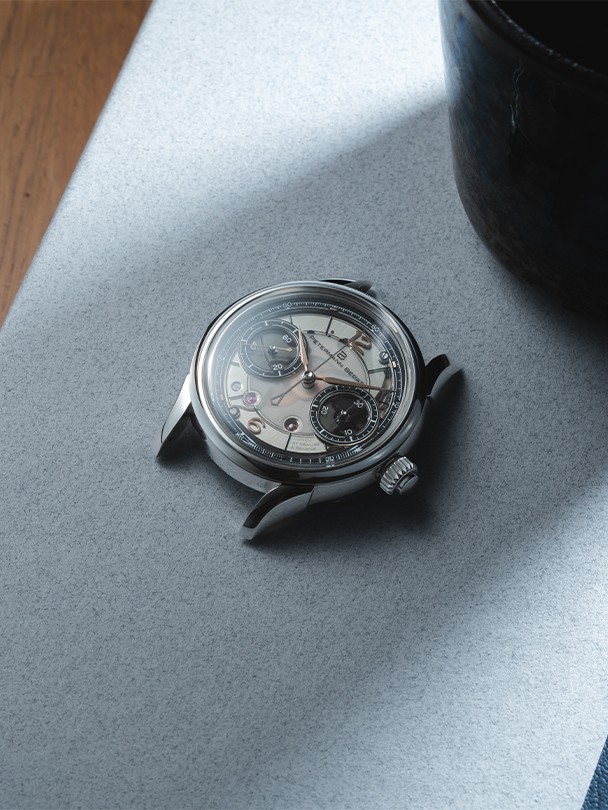
The Ref. 2914 features a compact 36.5mm platinum case with individually soldered lugs

The Ref. 2914 is housed in a platinum case measuring 36.5mm in diameter and 9.9mm thick, excluding the sapphire crystal. With its box-shaped crystal, the overall thickness measures 11.6mm. The case features individually soldered lugs, a construction associated with traditional watchmaking. Its compact dimensions are complemented by the density of platinum, lending the watch substantial weight despite its relatively modest diameter.


A box-shaped sapphire crystal with an anti-reflective coating protects the dial, while a sapphire caseback reveals the movement and its finishing. The watch is completed with a platinum buckle. The case design follows the founders' interest in the proportions of complicated watches from the past, particularly those that accommodated elaborate mechanisms without requiring larger cases.

The Calibre 234 and Its Instantaneous Minute Counter
THG_IAW26_PB_Ref-2914_Chronograph-Monopusher_4
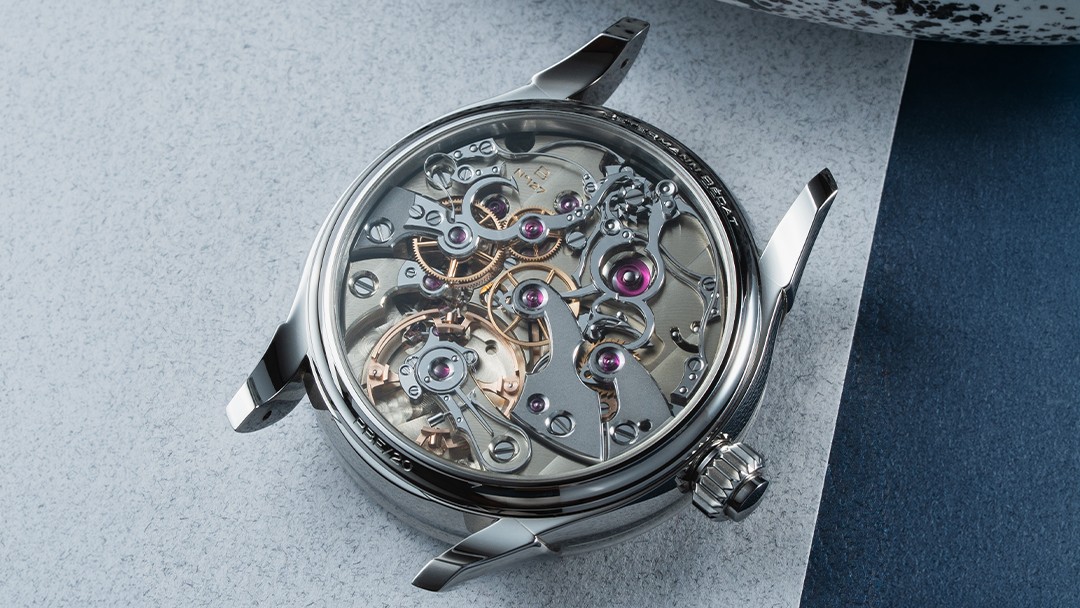
The manually wound Calibre 234 features an instantaneous minute counter and a 56-hour power reserve

At the centre of the Ref. 2914 is the manually wound Calibre 234, developed in-house by Petermann Bédat. Measuring 30mm in diameter, the movement operates at 18,000 vibrations per hour and provides a power reserve of 56 hours. Its principal complication is a monopusher chronograph equipped with an instantaneous minute counter.


Unlike a conventional chronograph with a gradually advancing minute indicator, the instantaneous mechanism advances the counter in a single jump at the completion of each elapsed minute. The chronograph's start, stop, and reset functions are operated sequentially through a single pusher, retaining a traditional arrangement found in historical monopusher chronographs.


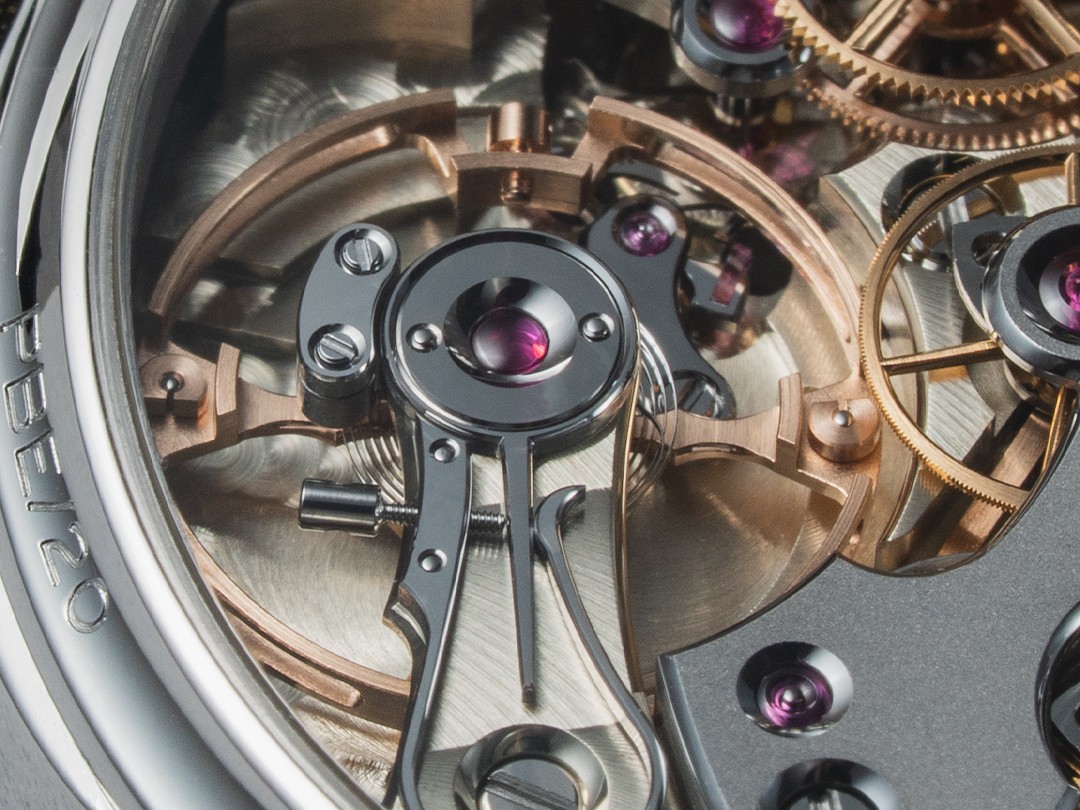
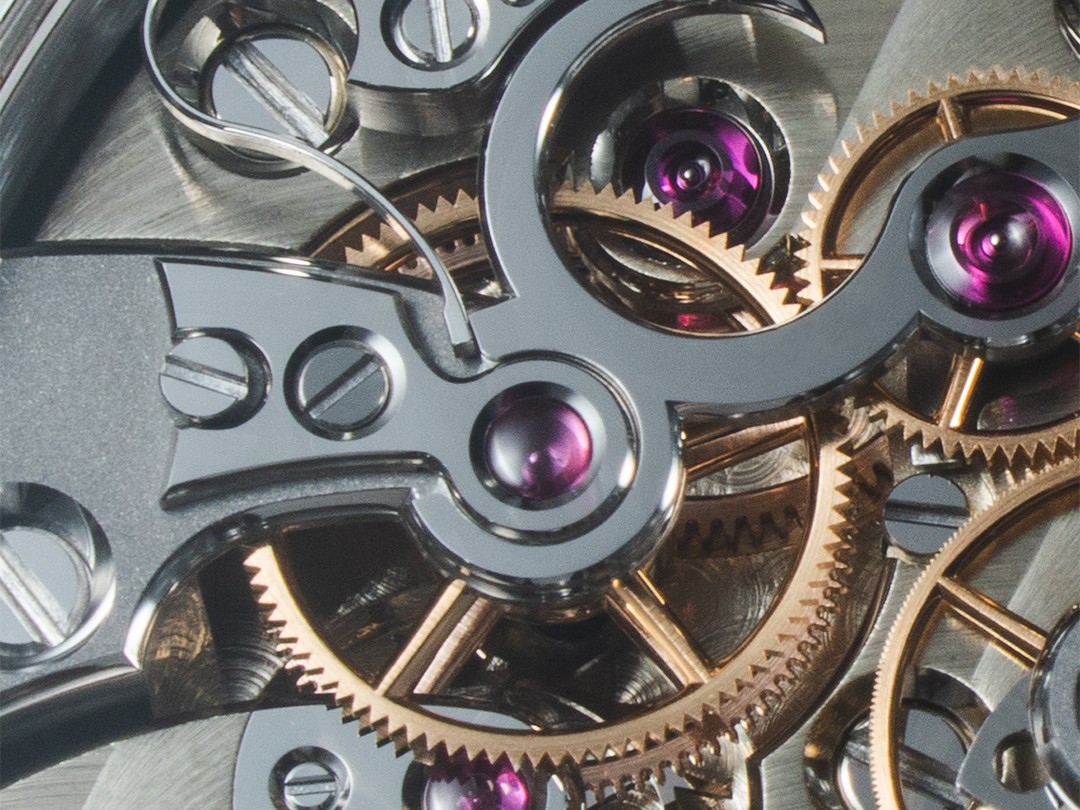
Beyond the revised complication, the Calibre 234 incorporates technical developments intended to improve reliability. Among these is a redesigned going train featuring solid gold wheels with hand-bevelled edges. The movement also incorporates a Breguet overcoil balance spring, while its mainplate and bridges are constructed from German silver, a material associated with traditional movement construction and finishing.

A Study in Traditional Movement Finishing
thg_iaw26_pb_ref-2914_chronograph-monopusher_5
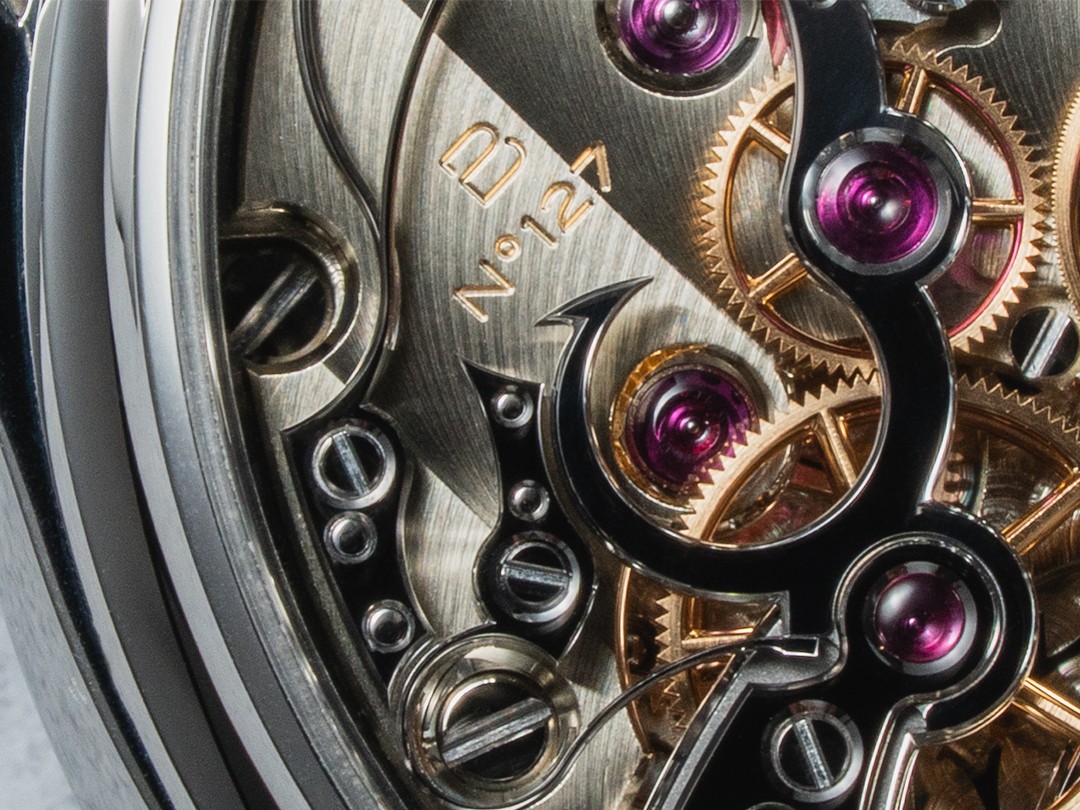
German silver bridges feature Côtes de Genève decoration and hand-polished edges
thg_iaw26_pb_ref-2914_chronograph-monopusher_6
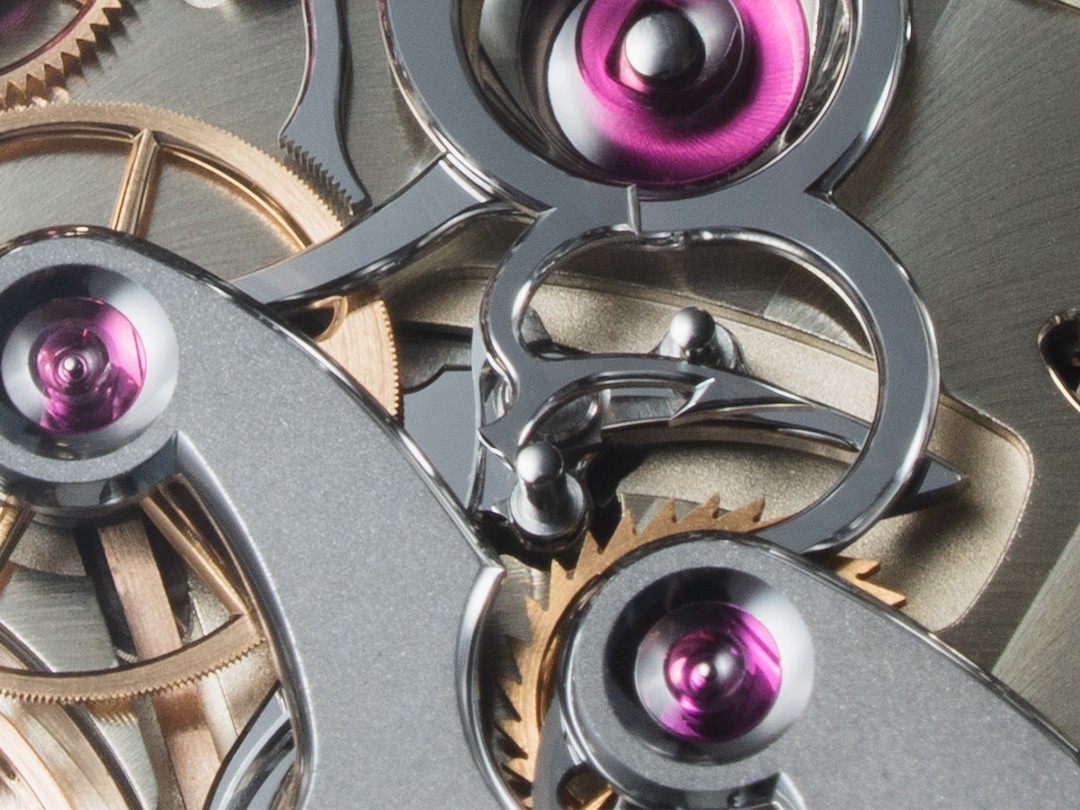
The Calibre 234 incorporates a Breguet overcoil balance spring
thg_iaw26_pb_ref-2914_chronograph-monopusher_7
Solid gold wheels with hand-bevelled arms are visible within the movement
thg_iaw26_pb_ref-2914_chronograph-monopusher_8
The hand-finished Calibre 234 features black-polished steel components and polished chamfers

The finishing of the Calibre 234 continues an approach established across Petermann Bédat's earlier creations, where the decoration of individual components receives considerable attention. The German silver bridges feature Côtes de Genève decoration alongside hand-polished chamfers. The mainplate is decorated with sun graining and perlage, while the stainless steel components undergo hand bevelling, polishing, and black polishing. The solid gold wheels feature circular graining, with their arms individually bevelled and polished by hand.


Further decoration includes circular graining on the balance, as well as snail graining applied to the barrel and ratchet wheel. These different treatments create contrasts between the polished steel components, the warmer tones of the gold wheels, and the German silver surfaces. The movement architecture also allows its mechanical components to remain visible through the sapphire caseback, providing a clear view of the chronograph mechanism and the finishing applied throughout.

A Reinterpreted Semi-Open Dial
THG_IAW26_PB_Ref-2914_Chronograph-Monopusher_9
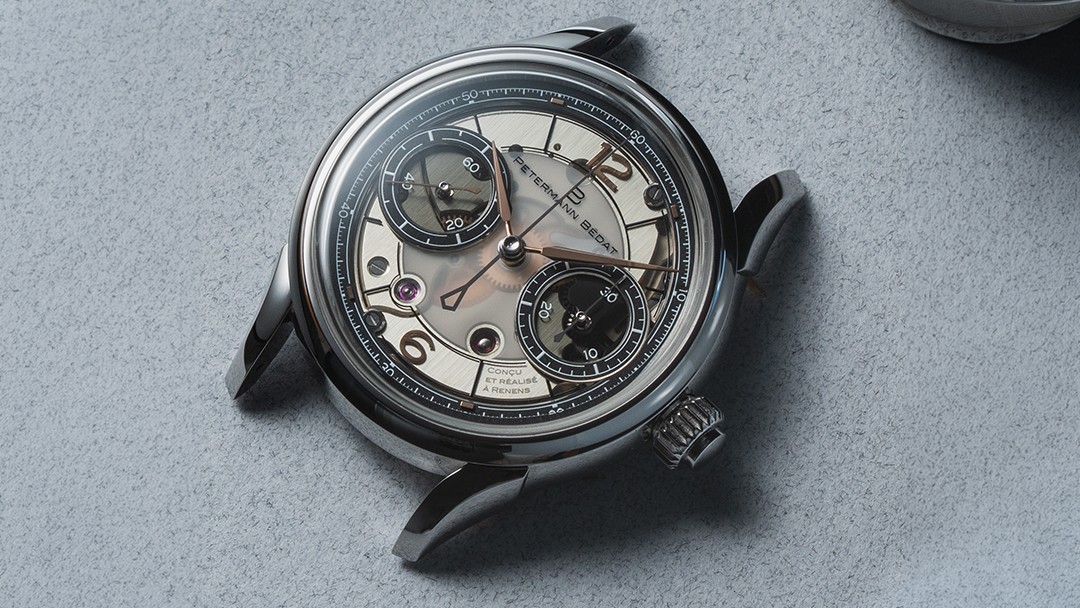
The semi-open dial combines stainless steel and sapphire plates with solid gold appliqués

The Ref. 2914 continues Petermann Bédat's distinctive semi-open dial construction, an element of the Manufacture's design language since its inaugural Ref. 1967. Developed in collaboration with Comblémine, the dial combines stainless steel and sapphire plates, allowing parts of the underlying mechanism to remain visible.


For the Ref. 2914, this arrangement has been revised from the Ref. 2941 to establish a different relationship between the dial and the movement. The construction reveals selected mechanical components while preserving the legibility of the indications.

Solid gold appliqués are integrated onto the sapphire, adding depth to the dial architecture. The hour, minute, and chronograph seconds hands are produced from gold and stainless steel, with each finished by hand.


The arrangement maintains the visual identity established by the Manufacture's earlier watches, with exposed components forming part of the dial's composition rather than remaining concealed beneath it.

A Shared Approach to Independent Watchmaking


The partnership between Gaël Petermann and Florian Bédat began at the Geneva Watchmaking School, where the two shared a workbench before continuing their training at A. Lange & Söhne in Glashütte, Germany. Following their return to Switzerland, they established a shared workshop and developed their expertise through the restoration of historical pocket watches and wristwatches.


Their Manufacture, based in Renens near Lausanne, has since produced a succession of watches that demonstrate their interest in classical movement construction and elaborate hand finishing. The Ref. 1967, introduced in 2020, established the Manufacture's identity through its deadbeat seconds complication. This was followed by the Ref. 2941 Split-Seconds Chronograph in 2023 and the Ref. 1825, a three-hand watch with a newly developed movement, in 2025.


The Ref. 2914 builds upon this progression, returning to the chronograph while refining its construction and dimensions. By concentrating on a monopusher mechanism, an instantaneous minute counter, and a compact platinum case, Petermann Bédat has developed a watch that reflects the founders' experience in historical restoration and their continuing exploration of contemporary mechanical watchmaking.

Share the story
1999 - 2026 © The Hour Glass Limited. All Rights Reserved.