menu
logopatek philippe certificate
THG_HBT_Classic-Fusion-Tributo_KV

HUBLOT RETURNS TO ITS ORIGINS WITH THE CLASSIC FUSION TRIBUTO

Latest Releases
16 Oct 2026 · 10 min read

In 1980, Carlo Crocco introduced a watch that would establish the foundations of Hublot. Presented at the Basel Fair under the MDM Genève name, the original Hublot brought together a gold case with a black rubber strap, challenging established conventions surrounding precious metals in Swiss watchmaking. Its distinctive porthole-inspired bezel, exposed screws, and minimalist dial would become the defining characteristics of a design language that has endured for more than four decades.


46 years later, Hublot revisits that founding design with the Classic Fusion Tributo, presented in two interpretations crafted from 18k yellow gold and 18k white gold. Drawing directly from Crocco's original creation, both references retain the essential proportions and visual characteristics of the 1980 model while incorporating the Manufacture's contemporary movement technology and construction techniques. The result is a return to the design that established Hublot's philosophy of the Art of Fusion, developed through the technical expertise accumulated since its founding.

Revisiting the Original Hublot
THG_HBT_Classic-Fusion-Tributo_Carlo-Crocco
Hublot founder Carlo Crocco wears the Classic Fusion Tributo Yellow Gold, reconnecting with the design he first introduced 46 years ago

The Classic Fusion Tributo maintains a close relationship with the original Hublot, preserving the juxtaposition of gold and rubber that distinguished Crocco's initial design. Its case has been enlarged from the original 36 mm to 38 mm, with a thickness of 9.5 mm, retaining the relatively restrained proportions that characterised the first model.


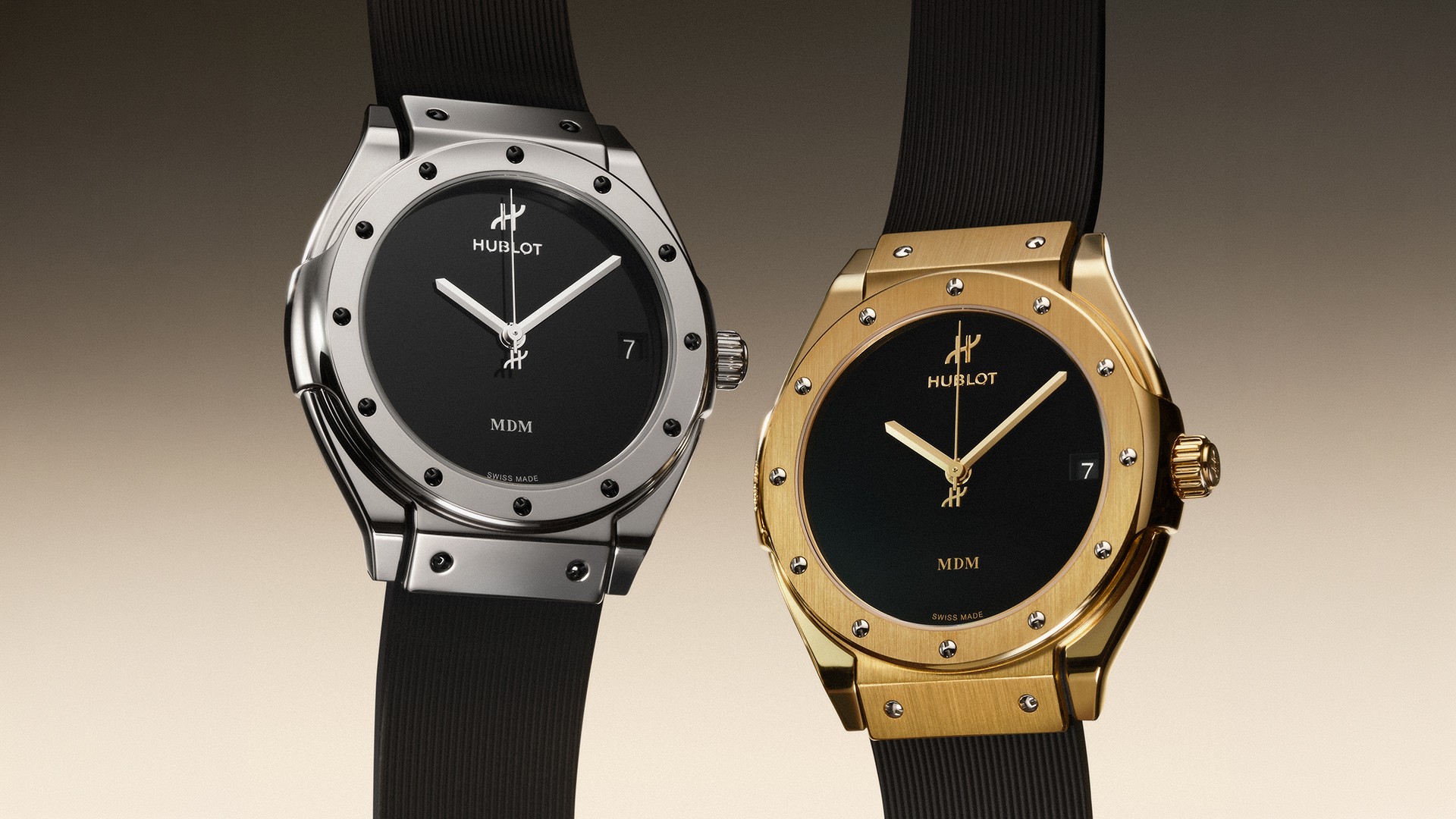
The porthole-inspired bezel remains central to the watch's identity, incorporating twelve slightly domed screws around its circumference. These serve as both functional components and visual markers, surrounding a dial deliberately free of conventional hour indices. A date aperture positioned at 3 o'clock follows the arrangement of the original, while a screwed crown contributes to water resistance of 100 metres.


Other details reinforce the relationship between the two generations. The black-lined rubber strap is secured between exposed lugs, allowing the case construction to remain visible. Hublot has also chosen to omit its contemporary One Click interchangeable strap system, maintaining a configuration closer to Crocco's initial design.


The combination of polished and satin-finished surfaces introduces further definition to the gold case, with the contrasting finishes accentuating its geometry. These adjustments retain the recognisable architecture of the original while reflecting the refinements introduced across Hublot's subsequent decades of watchmaking.

Classic Fusion Tributo Yellow Gold
THG_HBT_Classic-Fusion-Tributo_Yellow-Gold_1
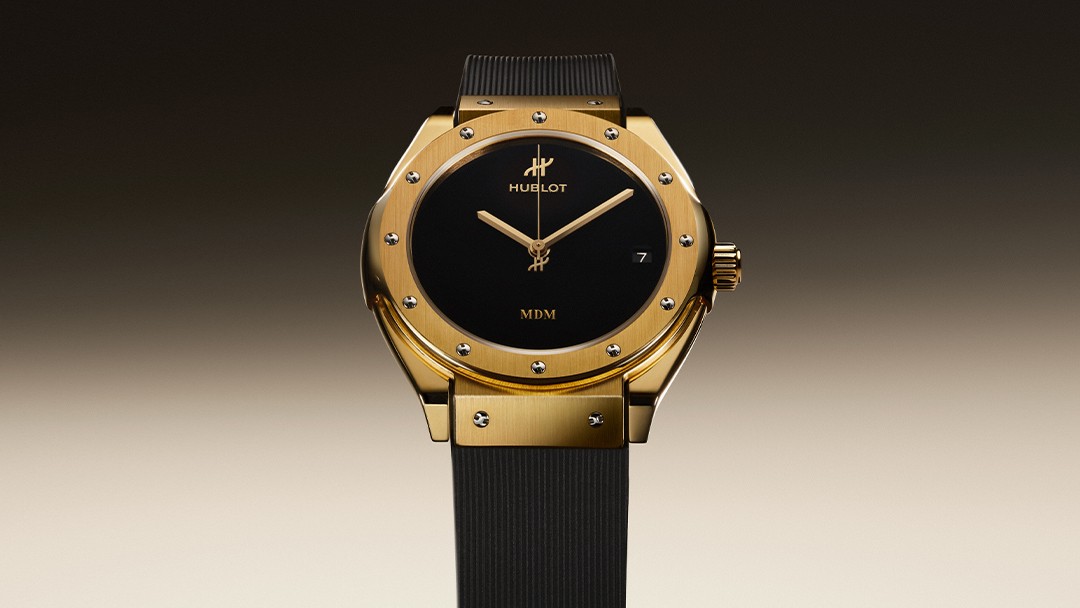
The vertically ribbed rubber strap complements the case's angular lugs, while the gold hands maintain a consistent visual treatment across the dial

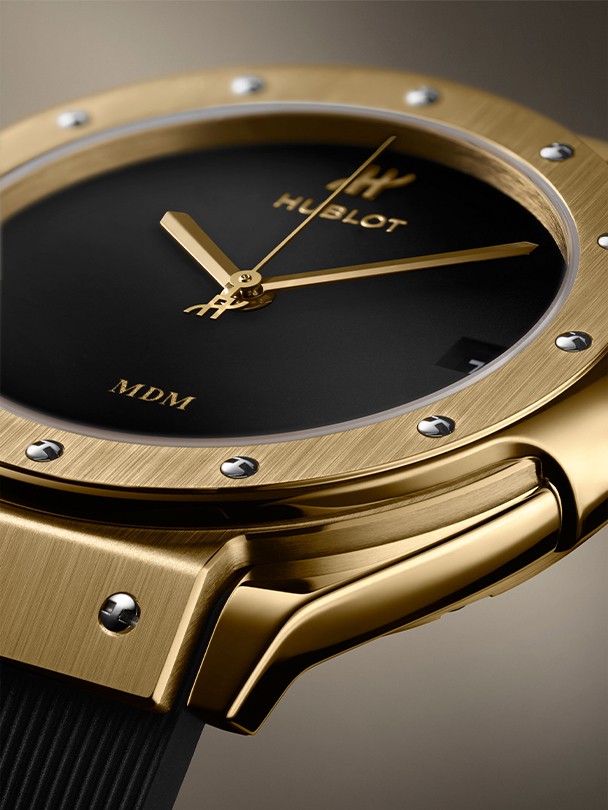
Of the two interpretations, the Classic Fusion Tributo Yellow Gold bears the closest resemblance to the original design introduced in 1980. Its polished and satin-finished 18k yellow gold case is complemented by a matt black dial with a subtle charcoal effect, recreating the contrast between precious metal and rubber that established Hublot's identity.


The dial follows a deliberately restrained arrangement, with slender gold hands set against the dark background. At 6 o'clock, the gold MDM signature recalls the MDM Genève name under which Crocco introduced his original creation. This historical detail establishes a direct connection between the contemporary reference and the watch that preceded the Hublot brand as it is known today.

THG_HBT_Classic-Fusion-Tributo_Yellow-Gold_2
A close-up highlights the brushed bezel, polished case edges, and raised Hublot emblem forming the counterweight of the central seconds hand

The MDM initials also carry a personal significance for Crocco, referencing his Main Dans la Main Foundation, established in 1998 to support humanitarian and educational initiatives for vulnerable children and communities.


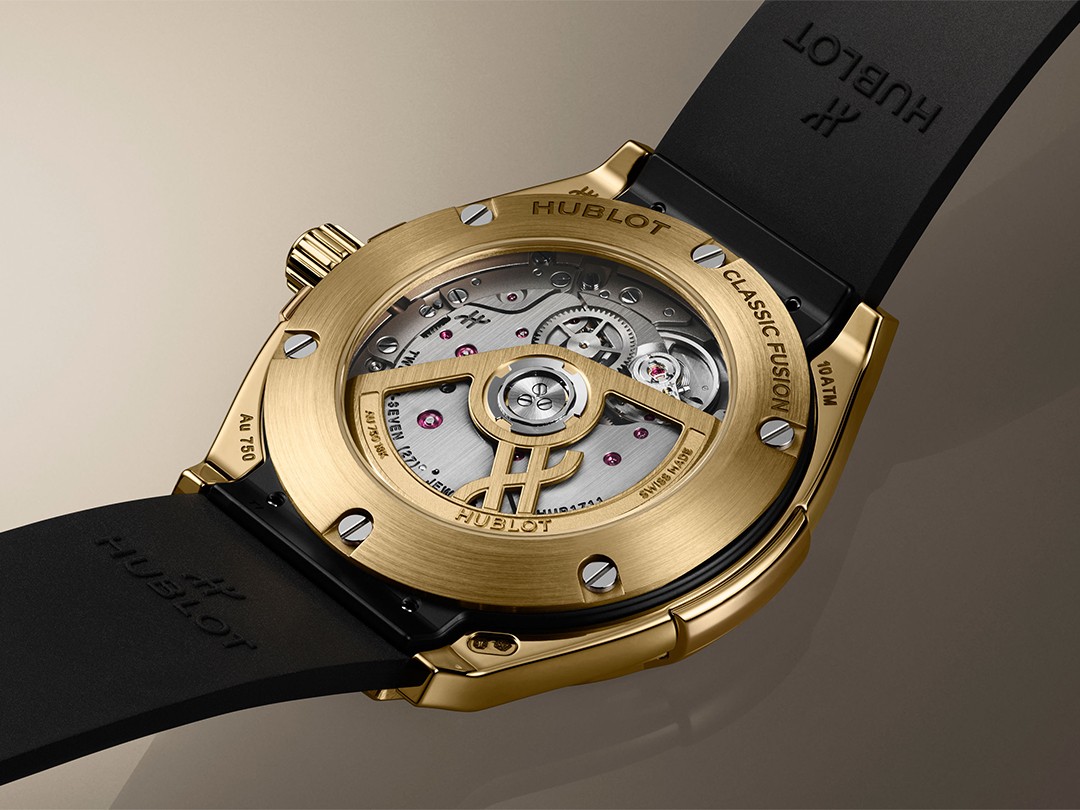
Further continuity is evident in the movement's 22k yellow gold oscillating weight, visible through the sapphire caseback. Its use of the same precious metal extends the material identity of the watch beyond its exterior, while polished titanium H-shaped bezel screws provide a subtle contrast against the yellow gold construction.

Classic Fusion Tributo White Gold
THG_HBT_Classic-Fusion-Tributo_White-Gold_1
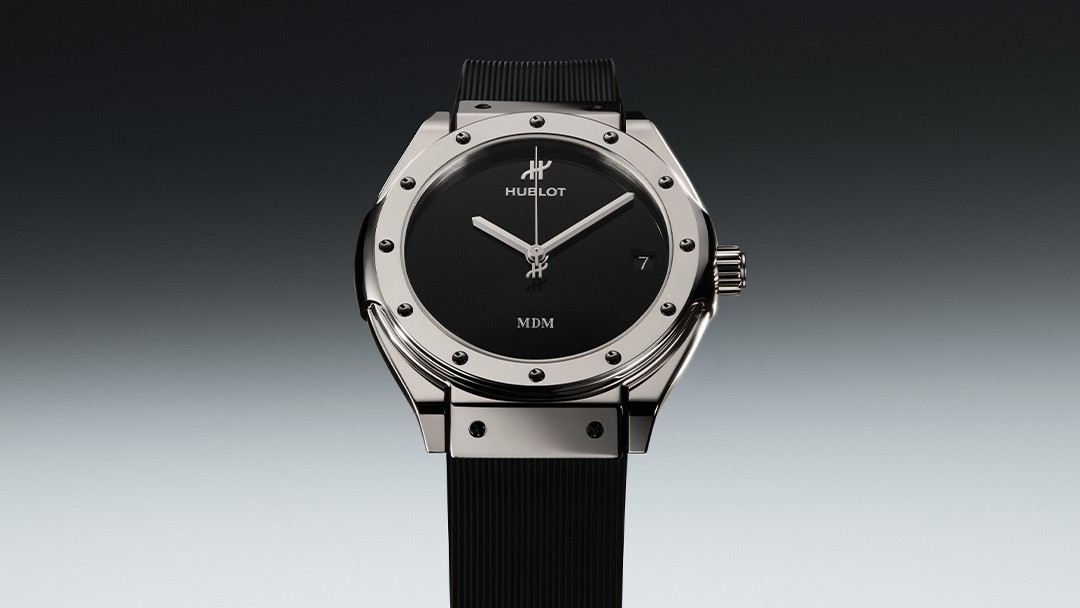
The slender central seconds hand passes over the polished onyx dial, accompanied by a discreet date window displaying white numerals

The Classic Fusion Tributo White Gold presents a different interpretation of the same design. Crafted from polished and satin-finished 18k white gold, its monochromatic appearance draws inspiration from the precise detailing associated with Italian tailoring.


A polished black onyx dial distinguishes this reference from its yellow gold counterpart. The smooth surface of the stone creates an uninterrupted black background, with the absence of hour markers placing greater emphasis on the hands, date display, and surrounding case architecture.

THG_HBT_Classic-Fusion-Tributo_White-Gold_2
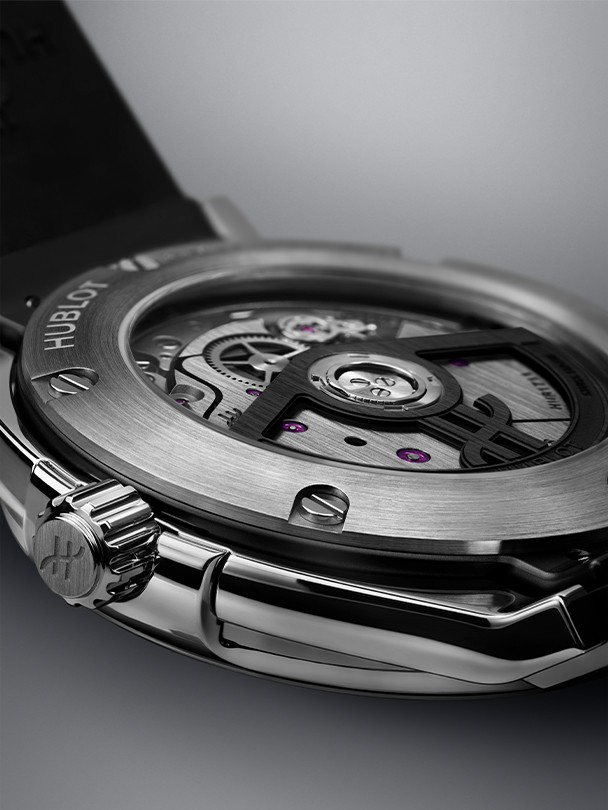
A closer perspective reveals the layered movement architecture, with visible gear wheels and ruby bearings beneath the oscillating weight

Black-plated titanium H-shaped screws punctuate the white gold bezel, introducing a contrasting detail that complements the dark dial and rubber strap. The interplay between these elements produces a more subdued aesthetic while preserving the recognisable proportions of the original Hublot.


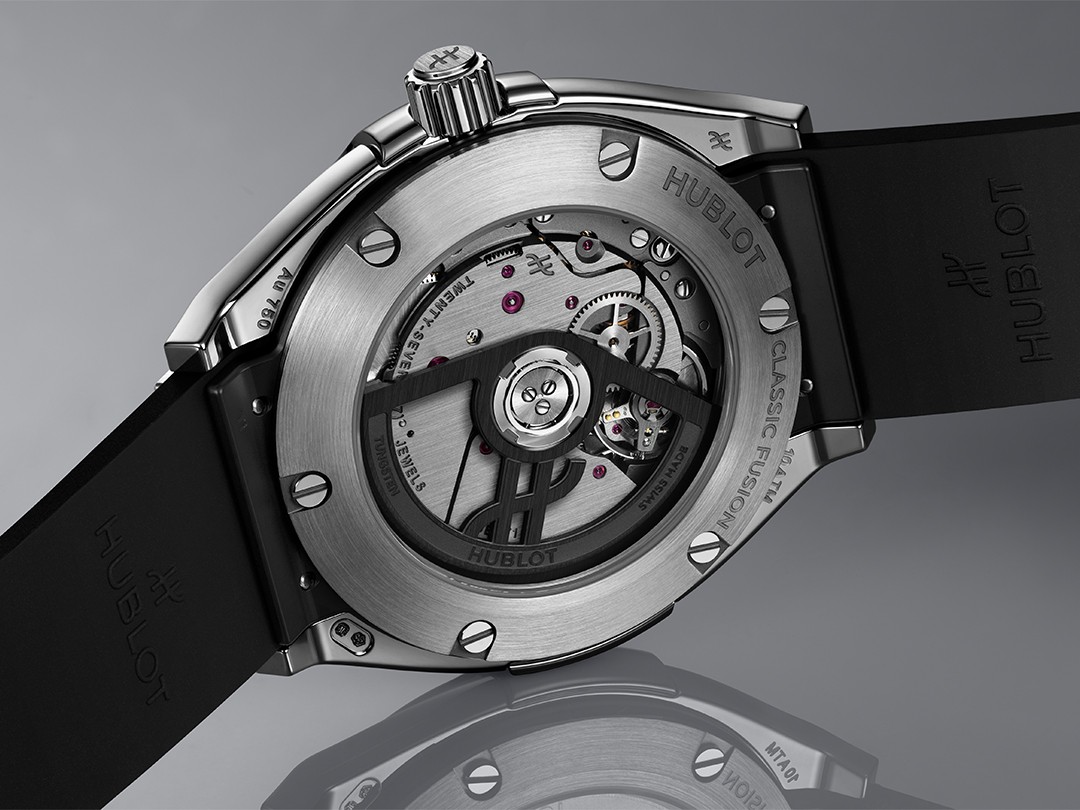
The monochromatic treatment extends to the movement, where a black tungsten oscillating weight replaces the yellow gold component found in the other reference. Together, the different dial materials, bezel screws, and oscillating weights establish two distinct interpretations of the Classic Fusion Tributo while retaining an otherwise shared technical construction.

A Contemporary Manufacture Movement
THG_HBT_Classic-Fusion-Tributo_Classic-Collection
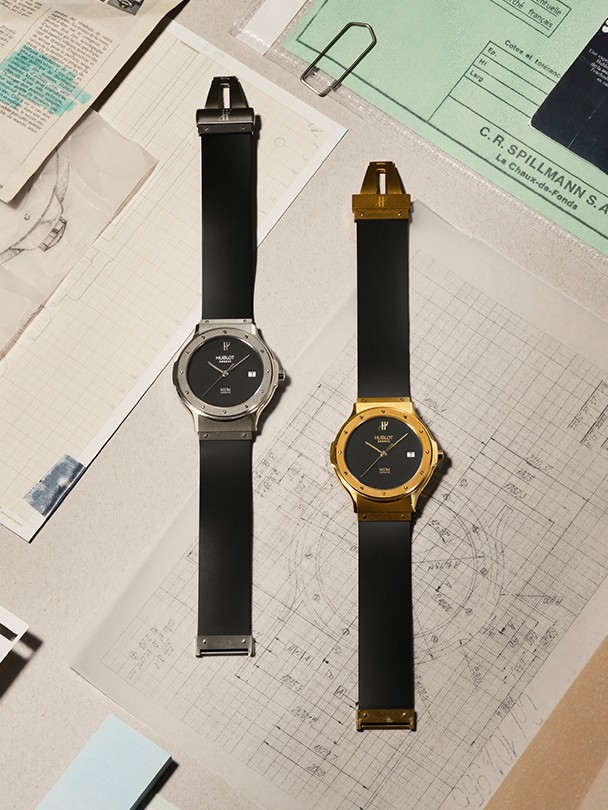
A look at the original Classic Fusion Tributo from the 1980s

While the Classic Fusion Tributo draws extensively from its predecessor's exterior design, its mechanical construction reflects the developments undertaken by Hublot since 1980. The original model was powered by a quartz movement, whereas both contemporary references are equipped with the HUB1711 Manufacture self-winding calibre.


Comprising 185 components, the movement operates at a frequency of 4 Hz, or 28,800 vibrations per hour. An optimised gear train contributes to its running autonomy, while the self-winding mechanism is equipped with an openworked oscillating weight shaped in the form of Hublot's distinctive H emblem.

THG_HBT_Classic-Fusion-Tributo_Yellow-Gold_3
The yellow gold caseback surrounds the movement, with its engraved inscriptions and six retaining screws framing the sapphire window
THG_HBT_Classic-Fusion-Tributo_White-Gold_3
The white gold caseback reveals the calibre's circular-grained components, exposed jewels, and contrasting surface finishes

Visible through the sapphire caseback, the oscillating weight provides a further connection between the movement and the manufacture's visual identity. Its execution differs according to the reference, appearing in 22k yellow gold for the yellow gold model and black tungsten for the white gold version. Both watches are conceived, developed, and assembled at Hublot's manufacture in Nyon, bringing contemporary mechanical watchmaking to a design originally associated with the earliest years of the brand.

Continuing Carlo Crocco's Vision


The introduction of the Classic Fusion Tributo also acknowledges Carlo Crocco's continuing relationship with the Manufacture he established. His decision to pair gold with rubber in 1980 introduced an unconventional material combination that would eventually develop into Hublot's broader Art of Fusion philosophy, influencing subsequent collections and the Manufacture's approach to case construction.


The Classic Fusion Tributo brings Hublot's earliest design into its present collection, retaining the defining characteristics of Crocco's original while replacing its quartz movement with a contemporary self-winding calibre. Across the two gold references, the familiar combination of a porthole-inspired case, minimalist dial, and rubber strap remains central to the design, illustrating how the ideas established in 1980 continue to inform the Manufacture's work 46 years later.

Share the story
1999 - 2026 © The Hour Glass Limited. All Rights Reserved.